
.png)


Is color analysis just for women?

Over the past two years or so, I have witnessed my spouse Maria’s (Hehkumpi) career as an entrepreneur and color consultant.
One of the most significant observations has been that at least 95% of the clients seeking color analysis are women, and the vast majority of the remaining 5%—men—come to the session accompanied by a spouse or partner.
In other words, it is fair to say that color analysis has largely been a women-only affair.
Hopefully, this is set to change in the future!

Is color analysis just for women?
Although the majority of color analysis clients are women, color analysis is certainly not just for women!
Naturally, I have received a color analysis result myself, since I live under the same roof as a color consultant.
In addition, I am exposed to the world of color analysis far more than the average person on a daily basis; consequently, I have gained a thorough understanding of the principles behind color analysis and what can be achieved with it.

Color analysis from man's point of view
From my perspective (as a man), color analysis has three dimensions:
How color analysis makes life and choices easier
How you look on the outside
How you feel on the inside
In my opinion, the last one is the most important of all.
These latter two dimensions go hand in hand, and it is difficult—or even pointless—to separate them. When you feel good, it radiates outward, and when you look good, it certainly feels good on the inside, too!

Color analysis and right colors complement your natural features
The basic premise of color analysis is, simply put, that the right colors best enhance an individual's natural features. Wearing the right colors makes you stand out and—according to color theory—presents the best possible version of yourself to the world.
Dressing in the colors selected through color analysis creates a stunning, harmonious look in which the colors of your clothing, accessories, hair, and makeup all complement one another and harmonize with you.

Color analysis makes you feel good
In my opinion, a third dimension has received less attention: the fact that undergoing a color analysis fosters a sense of well-being, joy, and overall wellness.
I am speaking from my own perspective here, but receiving the results of a color analysis has had a very positive impact on my life in many ways.
I understand myself better now that I know the characteristics of my features and which colors suit me. This feels good, because the analysis was performed by a reliable professional, and I have complete faith in the results.

Nowadays, when I pick an item of clothing from my wardrobe to wear, I think about how it suits me and how good I feel in it.
I have also found a new joy in dressing—something that wasn't there before. I used to wear practically nothing but black because I wanted to blend into the background, and I never really thought about my clothing in a positive light.
These days, I feel happy when I look at my wardrobe or at myself in the mirror. Wearing colors that suit me sparks positive thoughts about myself and, quite simply, brings me joy.

Color analysis makes life easier
When I mentioned that I see color analysis as having three dimensions, the fact that it simplifies life and decision-making is actually the sum of the other two dimensions. Knowing that you look and feel your best makes life significantly easier.
Knowing your colors makes shopping for clothes easier; your wardrobe contains only nice, coordinating pieces, and you feel good wearing them.
Life is much easier when you know and accept yourself just as you are.

Color analysis is for men too
Everyone has the right to feel good about themselves—men and women alike. Colors affect all genders equally.
In fact, one could even argue (perhaps a bit provocatively) that men might benefit from color analysis even more than women! Since men—stereotypically speaking—don't wear as much makeup as women, dressing in their most flattering shades is arguably even more important for them.
So, color analysis is definitely for men, too!

Why men don't go to color analysis
Why don’t men get color analysis? There are certainly many reasons for this—and I am speaking only for myself here, though I assume there may be others like me.
Perhaps the main reason is that color analysis is perceived as a "women's thing" (or "female nonsense"). In other words, it is viewed as a traditional beauty service for women—or, even more bluntly, dismissed as complete hogwash.

Men may perceive color analysis as something primarily for women, largely because it is often associated with makeup; if you don’t wear makeup, you might not consider color analysis useful.
Another significant reason is that color analysis is not effectively marketed to men. The focus is placed on women as the ideal clients, while men are mentioned only in passing—if at all.
A third reason is likely that 99% of color consultants are women. To my knowledge, there is currently only one male color consultant in Finland, but that is set to change in May!

I'll become a color consultant
Color analysis is certainly not just for women, and I aim to highlight this perspective in every way I can. As my paternity leave comes to an end, I am following in the footsteps of my partner, Maria (Hehkumpi), by leaving salaried employment to become an entrepreneur and color consultant offering color analysis services.
While anyone interested is welcome to book a color analysis with me, I am particularly keen on getting men excited about the process.
My color analysis sessions are slightly shorter—and a bit more affordable—than Maria’s. I believe this makes it easier for men to take the step of booking an appointment.
I place special emphasis on the personalized email guide provided to every client after the session; this ensures that the insights gained during the analysis aren't forgotten and equips the client with everything they need to put the results into practice.

Color analysis benefits men too
Men may actually benefit even more from color analysis than women, since we don't wear much makeup. Makeup, after all, can significantly alter one's appearance and the way colors interact with an individual's features.
As a man, I’ve found that color analysis has made getting dressed and shopping for clothes much easier. A practical example I often cite is that when shopping, I don’t necessarily even have to step inside a store; I can tell just from the doorway whether they carry clothes in the right colors for me.
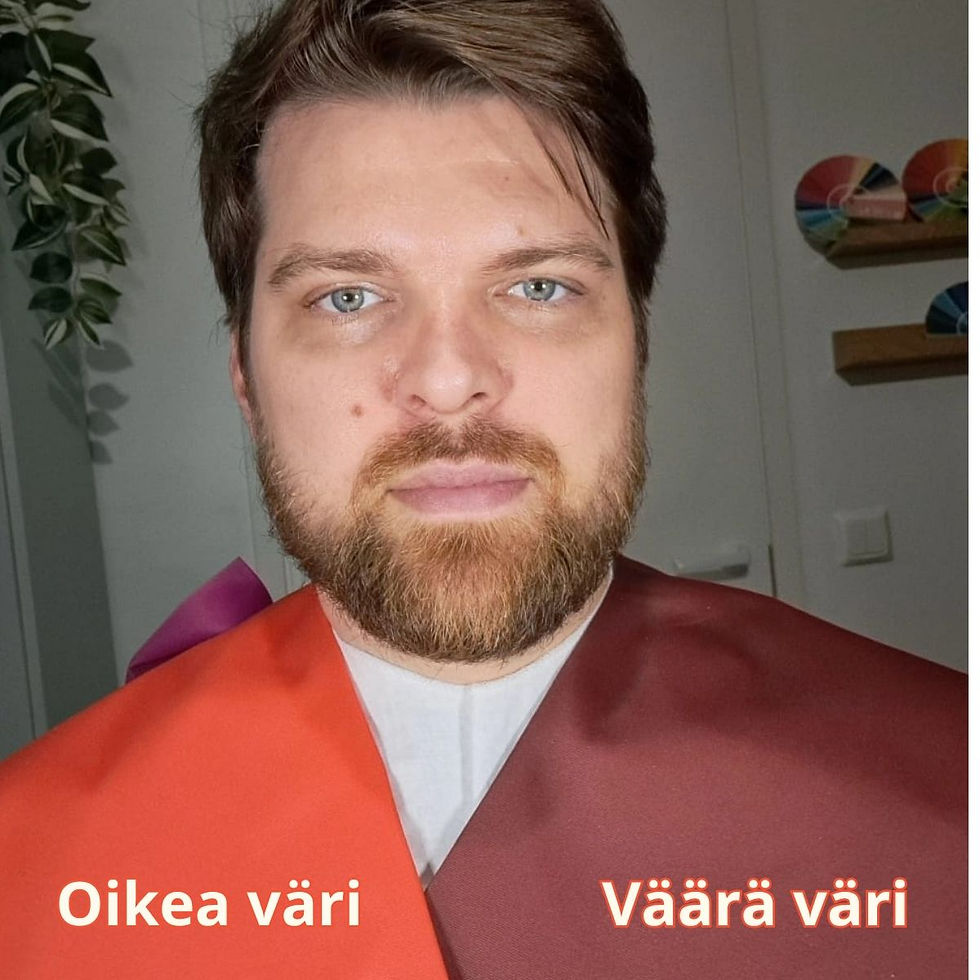
Thanks to the color analysis, I have started to like myself more; my self-confidence and self-esteem have improved, and my overall well-being has increased.
Color analysis sessions for men will be available for booking starting in late May, and I hope that this encourages men to discover color analysis—and embrace it more boldly—so they can benefit from the advantages it offers regarding their clothing and personal color choices.

Thanks for reading my post on the topic "Is color analysis just for women?"!
If you’d like to explore more of my thoughts on color analysis, feel free to check out other guest posts I’ve written for this blog. For instance, I’ve written a piece arguing that color analysis isn't a beauty service, but rather a wellness service.
You can also follow one of the few male color consultants on Instagram at @kevatmies!


Comments